jinke
Custom Machining
Learn what drawings, materials, quantities, tolerances and surface finish details are needed for an accurate CNC machining quote.
Machining Guides
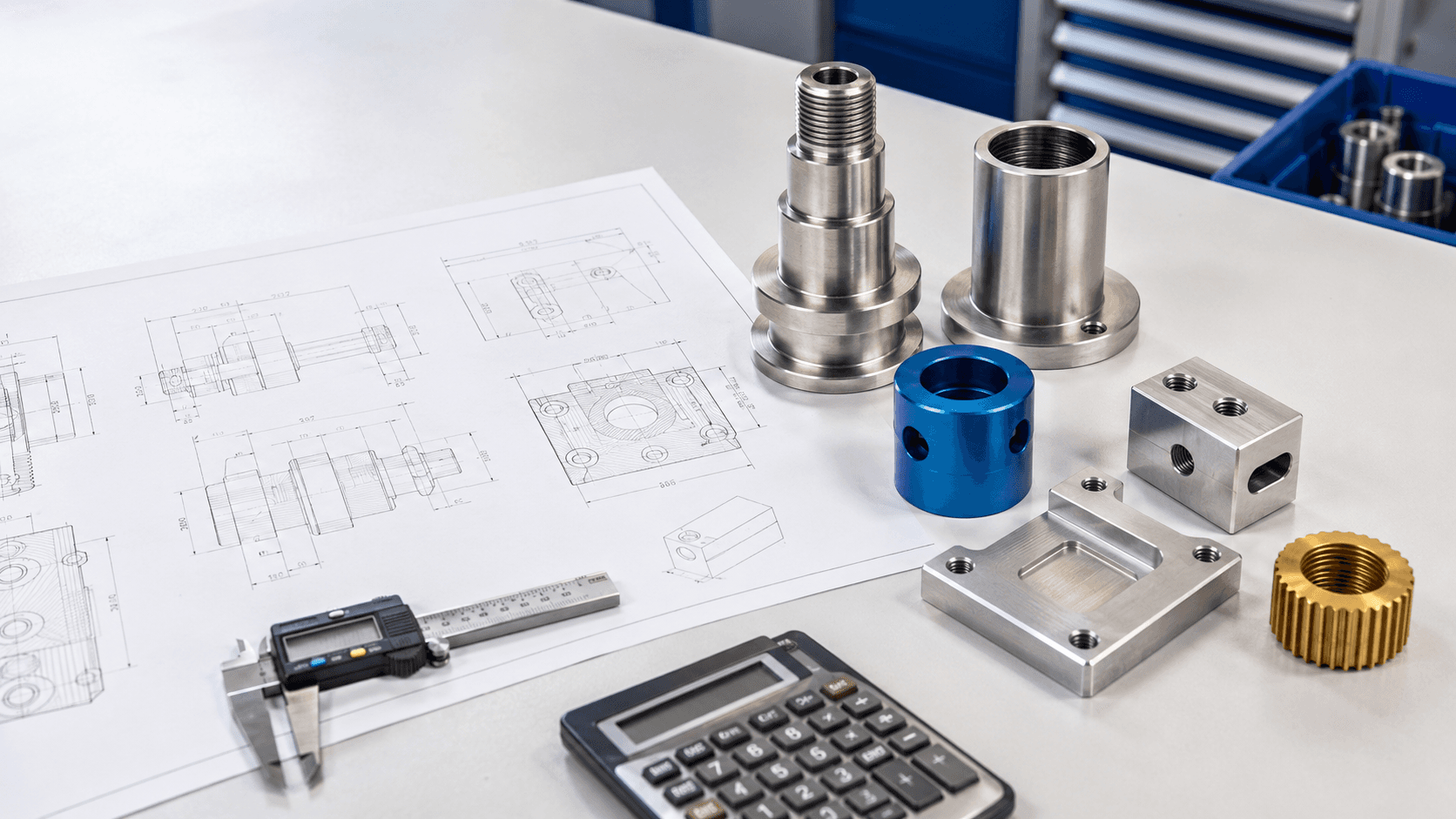
Getting a CNC machining quote does not need to be complicated. The more clearly we understand the part, the more accurately we can calculate the machining cost and lead time.
When sending an RFQ, the following information is usually enough for us to get started.
2D Drawings and 3D CAD Files
For most CNC machined parts, a 3D CAD model is the best starting point. STEP, STP, IGES and X_T are the file formats we commonly work with.
If available, please also send a 2D PDF drawing. The drawing should show any information that may not be included in the 3D model, such as:
Critical tolerances
Thread sizes and depths
Surface finish requirements
GD&T
Inspection requirements
Special production notes
For relatively simple parts, we can often quote from a clear 2D drawing or dimensioned sketch. If any dimensions or features are unclear, we will confirm them with you before production.
Material and Grade
Please specify the material and exact grade whenever possible. For example:
Aluminum 6061-T6
Stainless steel 304 or 316
Carbon steel or alloy steel
Brass or copper
Titanium
POM, nylon or other engineering plastics
Material grade matters because it affects both raw material cost and machining difficulty.
If you are not sure which material to choose, there is no need to guess. Tell us how the part will be used and what matters most—for example, strength, corrosion resistance, weight, temperature or working environment. We can then suggest a practical option for your application.
Required Quantity
Please tell us how many parts you need.
Quantity has a direct effect on the unit price because programming, machine setup and tooling costs are shared across the order. This is why a one-piece prototype usually costs more per part than a batch of 100 pieces.
If you need a prototype now but may place a larger order later, let us know both quantities. We can quote them separately so you can compare the prototype and batch prices.
Dimensions and Tolerances
Standard CNC machining tolerances are suitable for many parts. Tighter tolerances are usually only needed for certain functional areas, such as:
Bearing bores
Locating holes
Mating surfaces
Press-fit features
Sealing surfaces
Please mark these critical dimensions clearly on the drawing.
Very tight tolerances on every dimension can add unnecessary machining and inspection costs. If only a few dimensions are important to the function of the part, identify those dimensions rather than applying the same tight tolerance everywhere.
Surface Finish and Appearance
Please tell us whether the parts can be supplied as machined or require additional surface treatment.
Common options include:
Anodizing
Hard anodizing
Black oxide
Passivation
Nickel or zinc plating
Powder coating
Polishing or brushing
For anodizing, painting or powder coating, please include the required color and, if important, the gloss or texture.
Appearance requirements should also be mentioned at the quotation stage. For example, if a visible surface must be free from obvious tool marks, scratches or handling damage, please mark it as a cosmetic surface.
A requirement such as “no visible machining marks” may involve extra polishing, finishing and protective packaging, so we need to consider it when calculating the price.
Threads and Special Features
Thread information should include the standard, size and depth. For example:
M6 × 1.0, thread depth 12 mm
Please also point out any features that may require special machining or assembly, including:
Deep holes
Thin walls
Undercuts
Small internal corners
Press-fit holes
Threaded inserts
Welding
Assembly work
These features can affect the machining process, tooling and production time.
Inspection Requirements
Let us know what level of inspection or documentation you need.
This may include:
Standard dimensional inspection
Full dimensional inspection report
Material certificates
Surface treatment certificates
First article inspection
Other quality documents
If only certain dimensions need to be included in the inspection report, mark them clearly. This helps us choose the correct inspection method and include the cost in the quotation.
Delivery Location and Required Date
If you need us to quote shipping, please provide the destination country, city and postal code.
It is also helpful to tell us when you need the parts. Our normal production lead time is around 20–30 days after payment and final drawing confirmation. The actual lead time depends on the part complexity, quantity, material and surface treatment.
If your order is urgent, let us know when sending the RFQ so we can check the production schedule before quoting.
Don’t Have All the Information Yet?
That is fine. You do not need to be a machining expert before contacting us.
Send us the drawings, sketches or reference files you already have. If anything is missing, we will point it out and confirm the details with you before production.
For customers who are still developing a prototype, we can also discuss practical materials, tolerances and machining methods based on how the part will be used.
Quick RFQ Checklist
To help us prepare your quotation, please include:
2D drawing and 3D CAD file
Material and grade
Required quantity
Critical tolerances
Surface finish and color
Inspection requirements
Delivery location
Required delivery date
Need a CNC Machining Quote?
Jinke provides CNC milling, CNC turning and custom machining for prototypes and small-batch production. One-piece prototype orders are welcome.
Send your drawings through our Contact page or WhatsApp. We will review the files, confirm any unclear details and prepare a quotation based on your actual requirements.
JINKE · CNC MACHINING